Essay · 10 · 8 min read
The Psychology of the Entryway
The first thirty seconds in a house determine its perceived value. A close reading of the architectural decisions that shape a guest's — or a resident's — arrival.
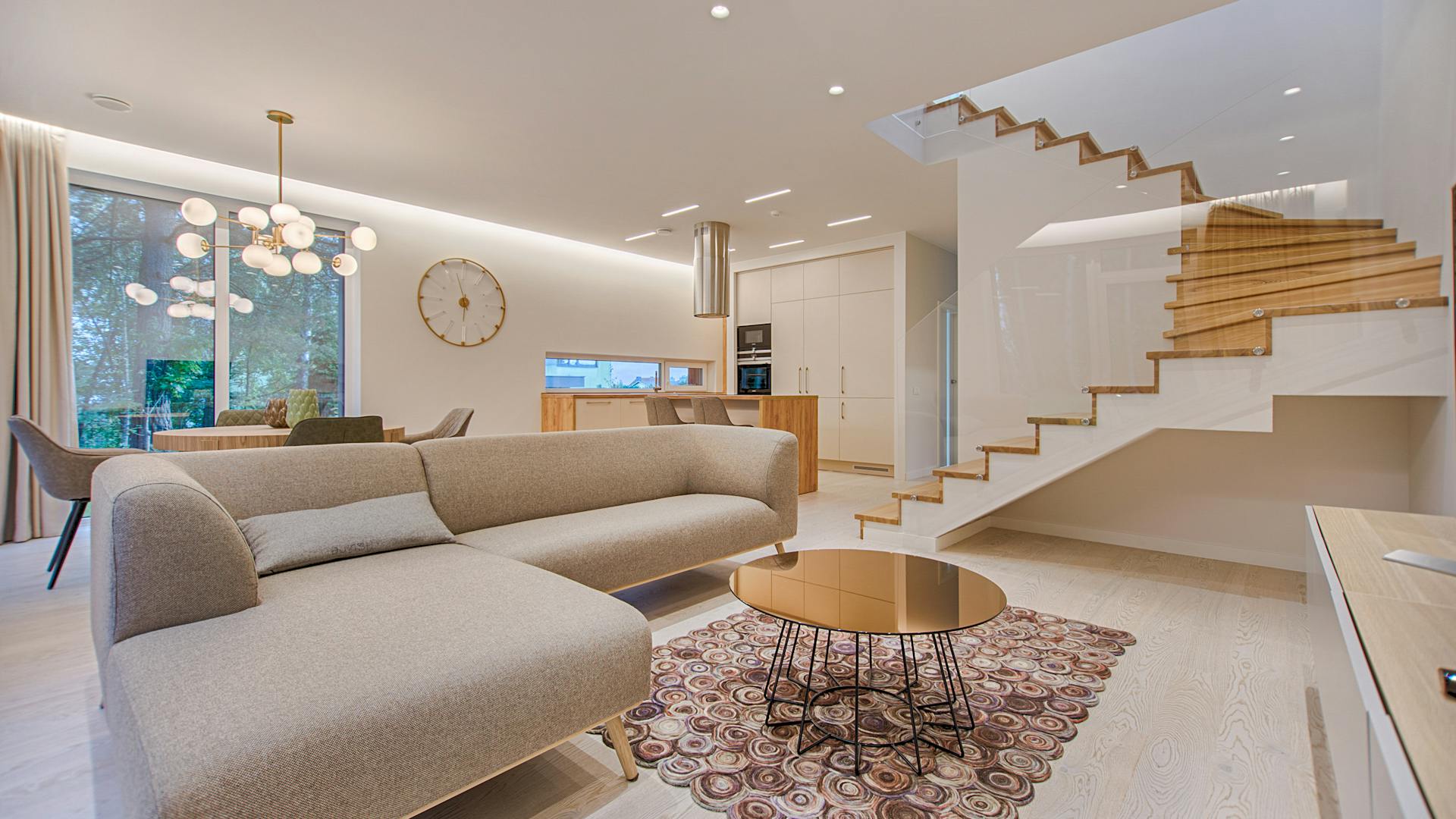
The threshold effect
Psychologists have documented the threshold effect: the human mind resets on passing through a doorway. This is why we forget what we came into a room for. It is also why the first thirty seconds after crossing a home's threshold have disproportionate impact on the resident's mood and the guest's assessment.
In luxury residential design, this thirty-second window is worth more attention than any other single moment in the house. Get it right and every subsequent room benefits from a positive frame. Get it wrong and the rest of the architecture spends the visit compensating.
Compression and release
The strongest entryways compress before they release. A lower ceiling, a narrower plan, or a darker material palette at the threshold sets up the volume of the primary living space that follows. Frank Lloyd Wright made this move a signature; contemporary luxury architects have quietly rediscovered it.
In our practice a typical entry sequence drops the ceiling to 2.4 metres, narrows the plan to under three metres in width, and uses a dark or textured material — hand-charred cedar, dark bronze, textured stone — before opening into a 4-metre-high great room in a lighter palette.
Scent, sound, and temperature
The most sophisticated entryways engage more than the eye. Scent is often introduced through a subtle diffuser above the door reveal — cedar, fig, or oakmoss in our regular palette. Sound is controlled through carpet or textile underfoot, killing the reverberation of a hard-surfaced hall. Temperature is set 1 to 2°C cooler than the primary living space, so the release into warmth is felt.
These are small moves. Collectively they turn arrival into an experience rather than a transit.
The concealment of function
A luxury entry is not a mudroom. Coats, shoes, keys, bags, and packages are private and functional; the entry composition should not be interrupted by them.
We design a concealed drop zone immediately adjacent to the primary entry — a doored volume with hooks, shelving, a bench, and integrated charging. It absorbs all the practical hardware of arrival, leaving the primary entry composition uncluttered.
Art and the first sightline
The single most important artwork in a luxury residence is the one on the primary entry sightline. It is what every visitor sees first and remembers longest.
We plan the primary sightline before we place any furniture. The wall at the end of the sightline is designed at gallery grade — flat plaster to museum tolerance, dedicated accent lighting, and cabling for future rotation of the piece. Everything else in the entry defers to that wall.
Light discipline
The entry is usually the darkest interior in a well-lit luxury villa. The relative darkness makes the release into the primary living space feel bright, generous, and warm.
This runs contrary to the retail habit of over-lighting an entrance. In a residence, the reverse discipline applies: warm, low-level, targeted illumination — a single accent on the artwork, a soft floor wash, and no more.
Security without visibility
The entry is the primary security perimeter. Concealed cameras above the door reveal, biometric locks embedded in the door pull, and pressure-sensor floor mats behind the threshold all deliver security without visible hardware.
For high-profile clients we design a full sallyport — an intermediate airlock between the outer door and the inner threshold — that reads architecturally as generous compression rather than as a security feature.
What a great entry actually does
A great entry sets the resident's nervous system down. It signals safety, quiet, and intention. It tells the guest that thought has been applied to their arrival before they have spoken a word.
This is what luxury actually is: not the material budget, but the assumption that every experience — including the first thirty seconds — has been considered.
Continue reading

The Evolution of Minimalist Villa Design
How the ultra-luxury villa moved from decorated maximalism to a high-performance minimalist standard — and what that transition demands of every designer, engineer, and material.
Biophilic Integration: How Nature Belongs Inside the House
Why indoor-outdoor living improves cortisol levels, sleep quality, and long-term mental health — and the architectural moves that turn a green wall from a photograph into a working ecosystem.

The Smart Home Vacuum: Why Visible Technology Is a Design Failure
The best smart home is the one you cannot see. A field guide to hiding thermostats, speakers, sensors, and screens without compromising the performance clients expect from their invisible infrastructure.